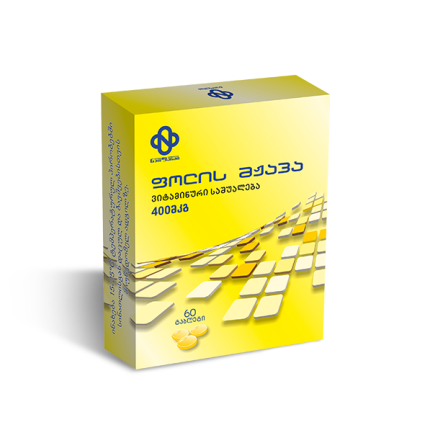
სამკურნალო-პროფილაქტიკური საშუალება
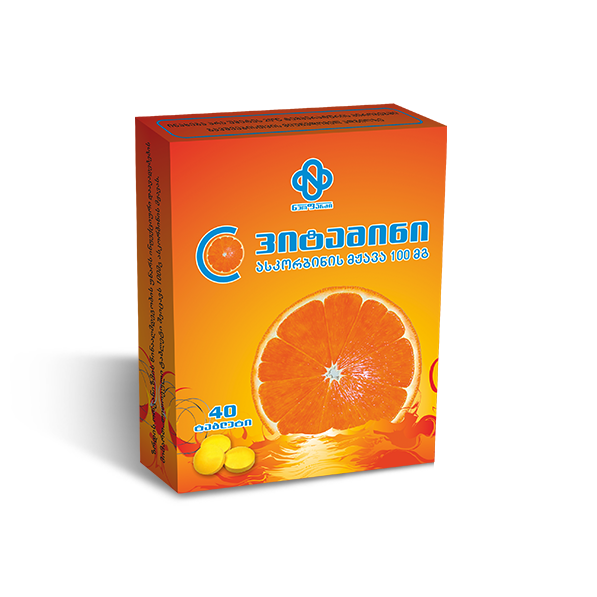
“ვიტამინი С” – 100 მგ
”VITAMIN C” – 100 MG
ტაბლეტები
Pharmacological group: Vitamin medicinal product.
Description: Yellowish, biconvex tablets with a diameter of 7 mm. The presence of slightly more intensely yellowish inclusions is permitted.
Composition: Ascorbic acid – 100 mg;
Excipients: Glucose, microcrystalline cellulose, calcium or magnesium stearate; talc; E 104.
Pharmacological action: Vitamin C has a multifaceted effect:
It promotes the utilization of carbohydrates and proteins, absorption of iron from food, and production of steroid hormones; participates in blood coagulation and metabolic processes, including the synthesis of vitamin B12; increases the body's resistance to infectious diseases and reduces vascular wall permeability.
By participating in these processes, vitamin C affects inflammatory and allergic reactions and promotes restorative and protective processes in the body. It reduces blood cholesterol levels and contributes to the normalization of blood pressure.
Pharmacokinetics: There are insufficient data available.
Indications: Used as an adjunct in complex therapy. Hypo- and avitaminosis, decreased immune resistance, prevention of upper respiratory tract infections; bleeding gums, decreased appetite, increased physical and mental workload; fatigue, asthenic conditions, iron-deficiency anemias, a tendency to bleeding caused by increased capillary wall permeability, and the period of convalescence following diseases;
Contraindications: Allergic reactions to any of the components of the medicinal product.
Method of administration and dosage: The medicinal product is taken orally after meals.
Adults: 100 mg to 600 mg per day (1 to 6 tablets per day);
Children: 1 to 6 years – 100 mg per day (one tablet per day);
Over 6 years – 100 mg to 300 mg per day (1 to 3 tablets per day);
Safety of use (precautions): Smoking may reduce the body's ability to absorb vitamin C. Taking high doses of the vitamin (more than 2 g per day) may affect the results of certain laboratory tests.
Due to the mild stimulant effect of vitamin C, its administration in the evening is not recommended.
Vitamin C should be used with particular caution in patients with certain congenital diseases (phenylketonuria, glucose-6-phosphatase deficiency, hemochromatosis, thalassemia, glucose-isomaltase deficiency, sideroblastic anemia), in patients with nephrolithiasis, and in cases of increased blood coagulability.
Overdose: High doses of vitamin C may cause anemia, headache, kidney stone formation, polyuria, convulsions, diarrhea, vomiting, and nausea. Due to a significant increase in urine acidity, there is a risk of stone formation in the kidneys and urinary tract (urate, oxalate, and cysteine stones). Treatment is symptomatic. Toxic levels of vitamin C are not reached, as large amounts are excreted in the urine. Cases have been described in the literature of daily intake of 15 g of vitamin C for 4 months without the occurrence of adverse reactions.
Pregnancy and lactation: Vitamin C is recommended during pregnancy and lactation.
Effect on the ability to drive vehicles and operate machinery: Vitamin C does not affect the ability to drive or work with machinery.
Interaction with other medicinal products: Vitamin C participates in the metabolism of a number of medicinal products.
When taken concomitantly with acetylsalicylic acid, vitamin C increases the effect of salicylates.
It may reduce the effects of amphetamines and tricyclic antidepressants.
Concomitant administration with deferoxamine increases urinary excretion of iron.
When taken in high doses, vitamin C may prolong blood coagulation processes and reduce the effect of anticoagulants.
Ascorbic acid increases the blood concentration of estrogenic medicinal products and all oral contraceptives.
A 2-hour interval must be maintained between administration of vitamin C and vitamin B12, as vitamin B12 is degraded when taken concomitantly with vitamin C.
Side effects: No adverse reactions are observed when the recommended doses are taken. Prolonged administration of high doses of vitamin C (more than 1 g per day) may cause headache, nausea, vomiting, diarrhea, skin flushing, and increased urine output.
Taking high doses may create conditions conducive to the formation of kidney stones.
Packaging: 20 tablets in a polyvinyl chloride blister. 2 blisters are placed in a cardboard box.
Storage: Store at a temperature not exceeding 25ºC, out of reach of children.
The medicinal product must not be used if any defects are detected during visual inspection!
Dispensing conditions: Pharmaceutical product Group III (dispensing conditions: available without a prescription).
Shelf life: 2 years.
Manufacturer: LLC “Neopharm”.
Georgia. Tbilisi. David Aghmashenebeli Alley, 12th km.
Tel/Fax: +995 (32) 259-57-90, 259-64-46
MAECENAS IACULIS
Vestibulum curae torquent diam diam commodo parturient penatibus nunc dui adipiscing convallis bulum parturient suspendisse parturient a.Parturient in parturient scelerisque nibh lectus quam a natoque adipiscing a vestibulum hendrerit et pharetra fames nunc natoque dui.
ADIPISCING CONVALLIS BULUM
- Vestibulum penatibus nunc dui adipiscing convallis bulum parturient suspendisse.
- Abitur parturient praesent lectus quam a natoque adipiscing a vestibulum hendre.
- Diam parturient dictumst parturient scelerisque nibh lectus.
Scelerisque adipiscing bibendum sem vestibulum et in a a a purus lectus faucibus lobortis tincidunt purus lectus nisl class eros.Condimentum a et ullamcorper dictumst mus et tristique elementum nam inceptos hac parturient scelerisque vestibulum amet elit ut volutpat.


Reviews
There are no reviews yet.