Instructions for use
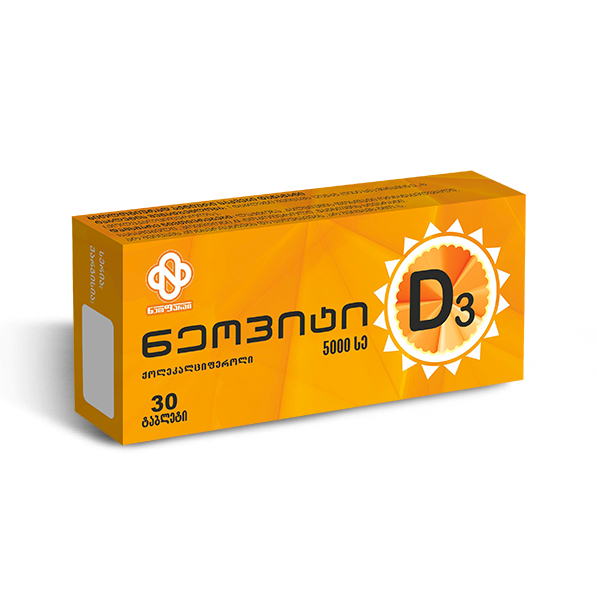
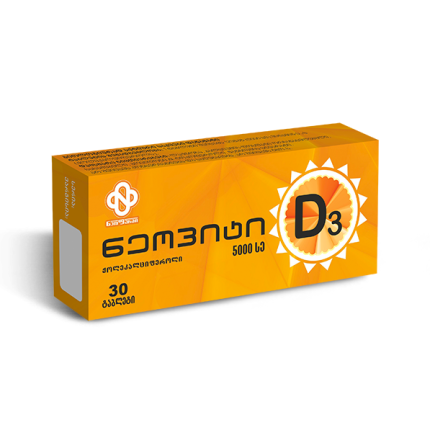
NEOVIT D3 – 2000 IU; 5000 IU
Pharmacotherapeutic group: Dietary supplement (source of monovitamin).
International Nonproprietary Name (INN): Cholecalciferol.
Composition: 1 tablet "Neovit D3" 2000 IU contains 50 mcg Vitamin D3 (cholecalciferol). 1 tablet "Neovit D3" 5000 IU contains 125 mcg Vitamin D3 (cholecalciferol).
Excipients: Lactose, dibasic calcium phosphate, starch, povidone, α-tocopherol, magnesium stearate.
Free from preservatives and artificial colors. Non-GMO.
Recommendations for use: Recommended for use as a dietary supplement, serving as an additional source of Vitamin D3 (cholecalciferol) to maintain optimal levels in the body.
Characteristics: "Neovit D3" contains Vitamin D3 – a vital vitamin essential for the proper functioning of virtually all organs and systems in the human body.
When taken orally, Vitamin D is almost completely absorbed (up to 80%) in the distal part of the small intestine due to the formation of micellar compounds. Maximum tissue concentration ($C_{max}$) is reached after 4–5 hours, after which the concentration decreases slightly and remains at a steady level for a prolonged period.
Role of Vitamin D in vital bodily processes (used in complex therapy as an adjuvant treatment):
- Skeletal System: Participates in the regulation of phosphorus-calcium metabolism: promotes calcium absorption in the intestines, regulates calcium and phosphorus levels in the blood, and activates bone metabolism. Helps increase bone strength and reduces the risk of developing rickets and osteomalacia. Maintaining normal Vitamin D levels is essential at any age, especially for elderly individuals when the risk of falls and injuries increases. Vitamin D strengthens teeth by stimulating the formation of dentin, its main structural component, thereby reducing the risk of dental caries.
- Endocrine System: Vitamin D is involved in regulating the function of virtually all endocrine glands.
- Carbohydrate and Lipid Metabolism: Improves carbohydrate and fat metabolism, positively influencing glucose and insulin metabolism; Vitamin D deficiency is a risk factor for the development of insulin resistance. Vitamin D helps lower blood levels of cholesterol, low-density triglycerides, and lipids, playing an essential role in correcting obesity and metabolic disorders. It also inhibits lipid oxidation processes.
- Cardiovascular System: Has a positive effect on vascular walls, blood coagulation processes, and the renin-angiotensin system. Participates in blood pressure regulation and helps normalize vascular tone.
- Muscular System: Promotes muscle strength and improves neuromuscular conduction, thereby reducing the risk of falls and fractures.
- Immune System: Helps maintain healthy immune function by affecting both innate and acquired immunity. Activates the synthesis of endogenous antimicrobial substances in cells of the skin, respiratory tract, and gastrointestinal tract, thereby reducing the risk of respiratory infections (common cold). Vitamin D regulates the synthesis of anti-inflammatory mediators by immune cells, suppressing inflammatory processes in the body.
- Reproductive System: Stimulates the synthesis of female and male sex hormones: estrogens, progesterone, and testosterone. Positively affects reproductive function in both women and men. Studies show that maternal Vitamin D3 intake during pregnancy reduces the risk of obstructive lung disease in children.
- Nervous System: Participates in regulatory processes of the nervous system by positively influencing cognitive functions (memory, concentration, capacity for learning, work efficiency). Vitamin D exerts a neuroprotective effect—playing a key role in brain protection mechanisms against damage. By participating in the conversion of tryptophan to serotonin, it helps elevate mood.
- Skin: Enhances metabolic processes in the skin and serves as a protective factor against skin aging.
- Digestive System: Positively affects gastrointestinal mucosal homeostasis, protecting, maintaining, and restoring epithelial barrier integrity. By influencing immune cell function, it helps suppress autoimmune inflammatory processes in the intestines.
- Energy Metabolism Regulation: Regulates cellular energy potential, helping relieve fatigue and increase body tone: Vitamin D increases ATP production in cellular mitochondria, serving as a universal energy source for all biochemical processes.
- Cellular Growth Regulation: Regulates cell growth, development, and renewal.
Vitamin D3, known as the "sunshine vitamin," is synthesized in human skin under the action of ultraviolet rays and is converted into its active form (1,25-dihydroxycholecalciferol) in the liver and kidneys. The second natural path to obtaining Vitamin D3 is through food products (best sources being fish, proteins, liver, mushrooms). Due to spending predominant time indoors, sufficient amounts of Vitamin D3 cannot be produced, leading to Vitamin D3 deficiency. Furthermore, in individuals over 65 years of age, Vitamin D synthesis capacity decreases due to increased skin thickness.
To ensure the body receives sufficient Vitamin D3 regardless of the season or sun exposure, additional supplementation is recommended. Regular use of Neovit D3 2000 IU and 5000 IU ensures replenishment of Vitamin D reserves in the body for a long period.
Indications: Used in complex therapy as an adjuvant treatment. The use of "Neovit D3" is recommended to:
- Maintain normal Vitamin D levels;
- Strengthen teeth and bones;
- Enhance immunity;
- Relieve fatigue and increase general tone;
- Strengthen muscles;
- Improve concentration and memory;
- Support reproductive function.
Dosage and administration:
Tablets should be taken before meals with a large amount of water.
The duration of administration depends on the level of Vitamin D in the blood. Consultation with a physician is required to determine duration.
"Neovit D3" 2000 IU tablet dosage:
- Children aged 3 to 12 years: 1 tablet every 2nd day.
- Children over 12 years and adults: 1 tablet daily.
"Neovit D3" 5000 IU tablet dosage:
- Children and adolescents (aged 11 to 17 years): 1 tablet once a week.
- Adults over 17 years: 1 tablet every 2nd day.
Precautions: Do not exceed the recommended daily dosage. Dietary supplements should not be used as a substitute for a balanced diet.
The recommended maximum daily dose for adults and elderly individuals is 4000 IU (100 mcg/day). If necessary, the daily dose may be increased following consultation with a physician.
During pregnancy and lactation, Vitamin D3 should be supplied to the body in adequate amounts. Overdosing may negatively affect maternal and child health. During pregnancy, Vitamin D3 should be taken strictly according to medical recommendation.
Side effects: Allergic reactions, signs of hypervitaminosis.
Overdose: Symptoms of overdose include loss of appetite, nausea, vomiting, constipation, anxiety, thirst, diarrhea, headache, sleep disturbances, and elevated temperature.
Treatment: Discontinue the preparation and consult a physician. Drink plenty of fluids.
Contraindications: Do not use in case of hypersensitivity/allergy to any component of the dietary supplement, or a history of celiac disease.
Packaging:
Primary packaging: 10 tablets in a PVC/Alu blister.
Secondary packaging: 3 blisters placed in a box together with the instruction leaflet.
Prescription status: Group III, non-prescription (OTC).
Shelf life: 2 years.
Storage conditions: Store in a dry place, protected from light, at a temperature not exceeding 25°C.
Manufacturer: "Neopharm" LLC.
Georgia, Tbilisi, David Agmashenebeli alley 12th km.
Tel/Fax: +995 (032) 259-64-46, 259-57-90.








 Popular
Reviews
There are no reviews yet.