Laxative
ATC Code: A06AB05
International Nonproprietary Name (INN): Castor oil
Dosage Form: Oil for internal and external use.
Description: Colorless or pale yellow, transparent oil with a specific odor.
Composition: Castor oil – 50 ml.
Pharmacological Group: Laxative of plant origin.
Pharmacological action: In the alkaline environment of the duodenum, castor oil is hydrolyzed by lipase to form ricinoleic acid, which, at a concentration of 0.5 mg/L, stimulates intestinal receptors and reflexively increases intestinal peristalsis. Under the effect of castor oil, the absorption of electrolytes and water through the intestinal wall is inhibited, while water secretion increases and the volume of intestinal contents expands. This enhances intestinal motility and accelerates the process of bowel evacuation. The laxative effect occurs 2–6 hours after administration. Following administration of 4 g of castor oil, absorption of ricinoleic acid is 100%; following administration of 50 g, it is only 36%, and following administration of 60 g, it is 10%. A dose of 10 g of castor oil is required to achieve a laxative effect.
Use of the medicinal product may also induce reflex contractions of the uterine musculature.
Castor oil consists predominantly of monounsaturated fatty acids. It is unique among fats and oils as the only source of an 18-carbon fatty acid containing a hydroxyl group and one double bond. It contains approximately 87% ricinoleic acid, as well as palmitic, oleic, and linoleic acids, which are readily absorbed through the skin and contribute to the nourishment and strengthening of hair roots and promote hair growth.
Indications:
• Acute constipation;
• Poisoning;
• Food intoxication;
Method of administration and dosage:
As a laxative, adults should take 15–30 mL (1–2 tablespoons) once daily; children aged 12–14 years: 5–15 mL (1–3 teaspoons) daily.
Treatment should be continued for 4–7 days.
Precautions:
It is recommended that castor oil be used as a laxative for no longer than 3 days.
Prolonged use of castor oil may cause digestive disturbances, as well as decreased absorption of vitamins A and D and, consequently, hypovitaminosis.
Side effects:
• Abdominal pain, nausea;
• Digestive disturbances; with frequent use – enterocolitis and hypovitaminosis A and D;
Contraindications:
• Chronic constipation;
• Acute intestinal inflammation (including appendicitis);
• Abdominal pain of unknown etiology;
• Pregnancy and lactation;
• Children under 12 years of age;
Interaction with other medicinal products:
Concomitant administration with fat-soluble vitamins reduces the absorption of vitamins A, D, and K.
M-cholinergic blocking agents (antipyrine, platyphylline) and antispasmodic agents (papaverine, drotaverine) reduce the effect of castor oil.
Anticholinesterase agents (neostigmine, rivastigmine) and glycerin enhance the effect of castor oil.
Overdose: Symptoms of overdose occur upon ingestion of castor oil at a dose of 7 g/kg: abdominal pain, nausea, vomiting, diarrhea, and dizziness.
Atropine sulfate and loperamide are used as antidotes.
In the event of an overdose, it is necessary to discontinue use of the oil and consume large amounts of fluid.
Use in pediatrics: Castor oil is not indicated for children under 12 years of age due to the increased sensitivity of the gastrointestinal tract to irritants and the potential risk of dehydration.
Pregnancy and lactation: Use of the medicinal product is not recommended during pregnancy and lactation.
Effects on the ability to drive and operate machinery: The medicinal product does not affect the ability to drive vehicles or operate machinery.
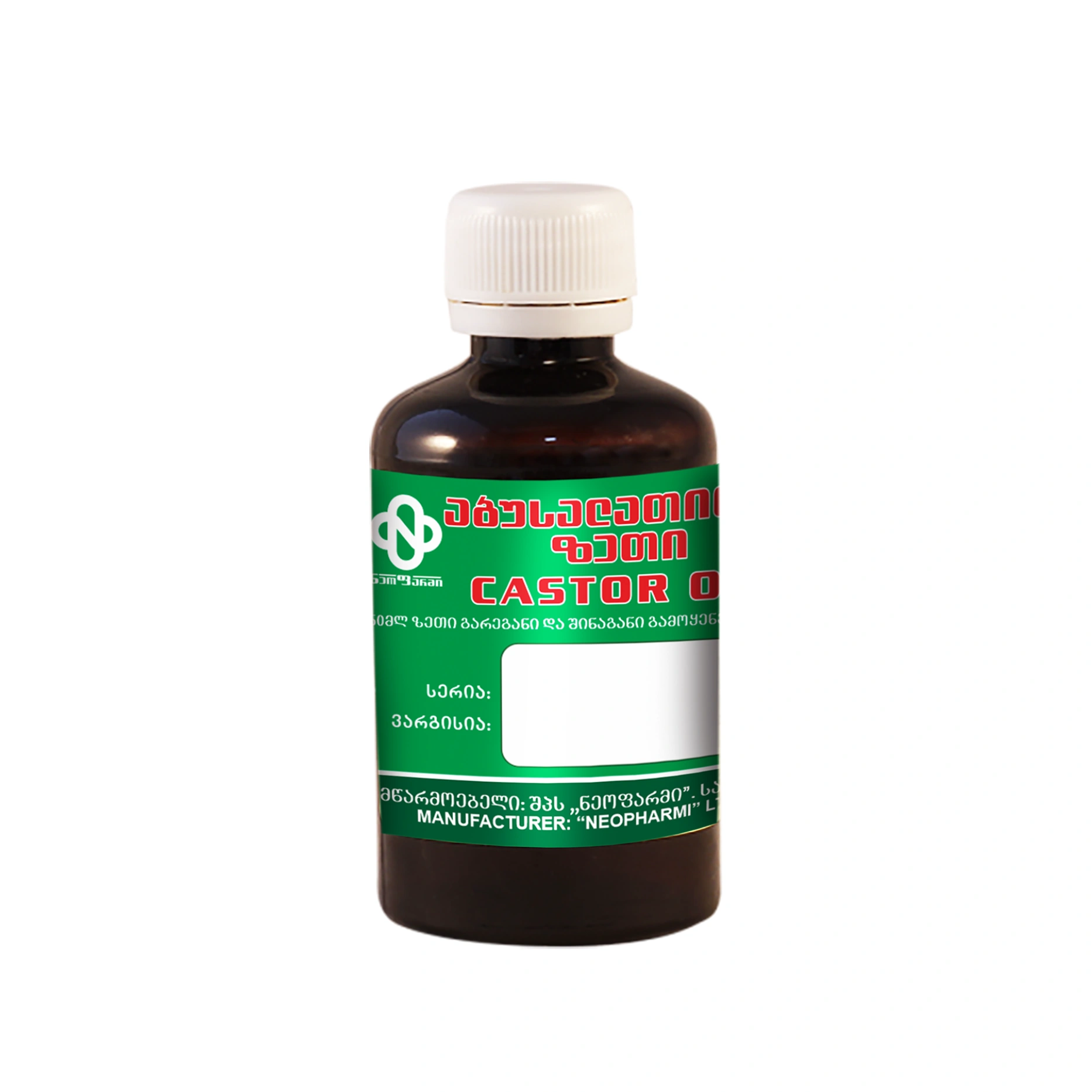
Presentation: 50 mL of oil with a dark orange coloration in polymer or glass bottles;
Dispensing conditions: Pharmaceutical product group III (available without a prescription).
Shelf life: 3 years.
Storage conditions: Store at a temperature of 8–15°C, protected from light and out of the reach of children.
Do not use the product after the expiration date or if defects are detected upon visual inspection.










 Popular
Reviews
There are no reviews yet.